


 Gospel Preachers TV
Global Aircraft Autopilot Market: Automation, Fleet Modernization, and Aviation Growth
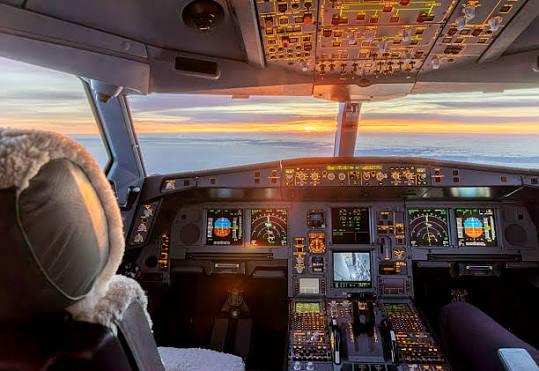
The global aircraft autopilot industry is developing alongside rising air traffic, expanding aircraft fleets, and the increasing integration of digital avionics. Autopilot systems assist flight crews by automatically controlling selected aspects of aircraft flight, including pitch, roll, heading, altitude, and other flight-path functions. Growing emphasis on operational efficiency, flight safety, workload management, and avionics modernization is supporting demand across commercial, military, business, and general aviation.
According to the Global Aircraft Autopilot Market research report by Markntel Advisor, the market was valued at approximately USD 5.75 billion in 2025 and is projected to reach USD 6.09 billion in 2026 and USD 8.58 billion by 2032. The market is expected to register a CAGR of 5.88% during 2026–2032. North America accounts for approximately 35.62% of the market in 2026, while Commercial Aircraft and Aftermarket lead their respective segments.
Rising Air Traffic Supports Automation Demand
Increasing passenger traffic and aircraft utilization are strengthening demand for automated flight technologies. Airlines operate complex networks where reliable navigation, flight-path management, and workload reduction are important operational considerations. As fleets expand and aircraft spend more time in the air, integrated avionics systems become increasingly relevant to efficient and consistent flight operations.
The Federal Aviation Administration explains that modern flight guidance systems can incorporate autopilot, flight director, and automatic thrust-control functions, together with interactions involving stability augmentation and trim systems. This reflects the increasing integration of autopilot functions within broader aircraft flight-control architectures rather than their operation as isolated systems.
Commercial Aircraft Maintain a Leading Position
Commercial Aircraft accounted for approximately 53% of the global aircraft autopilot market in 2026, according to the report. The segment benefits from expanding airline fleets, increasing flight activity, and continued investment in avionics upgrades. Narrow-body aircraft are particularly important because of their extensive use on domestic, regional, and short- to medium-haul routes.
Airlines also use advanced automation to support flight-path accuracy and reduce routine workload. Modern autopilot systems can interact with flight management systems, navigation equipment, flight directors, and other avionics. These integrated capabilities allow aircraft to follow programmed flight paths while crews maintain responsibility for monitoring system performance and managing the flight.
Aftermarket Segment Dominates
The aftermarket segment accounted for approximately 75% of the market in 2026, making it the leading end-use category. Its strong position reflects the large installed base of aircraft requiring avionics upgrades, maintenance, replacements, software updates, and retrofit solutions throughout their operational lives.
Retrofit programs allow operators to modernize existing aircraft without replacing entire fleets. Upgrades can include digital autopilot systems, improved flight-control computers, updated sensors, actuators, and software. This creates continuing demand from airlines, business aviation operators, and other fleet owners seeking to maintain aircraft capabilities while meeting evolving operational and technology requirements.
Digital Autopilot Systems Gain Importance
Digital autopilot technologies are becoming increasingly important as aircraft avionics move toward integrated electronic architectures. Digital systems can coordinate information from sensors, flight-control computers, navigation equipment, and other onboard systems to provide automated flight guidance.
The evolution of flight guidance systems has also increased their functional complexity. EASA guidance emphasizes the importance of appropriate automation management, including monitoring system engagement, automatic mode transitions, and deviations from the intended flight path. This highlights the growing need for flight crews to understand and monitor increasingly sophisticated automation rather than treating autopilot systems as fully independent functions.
AI and Advanced Automation Influence Development
Artificial intelligence and advanced computing are influencing research and development across aviation automation. AI-enabled technologies can support areas such as predictive maintenance, flight-data analysis, decision support, and automated monitoring. In aircraft autopilot systems, developments in computing and sensor processing can contribute to more sophisticated flight-management capabilities.
However, advanced automation continues to operate within established certification and human-machine-interface requirements. Autopilot technologies must be designed to provide clear system status, appropriate engagement and disengagement functions, and predictable interactions with flight crews. These considerations remain important as automation becomes more capable.
North America Leads the Market
North America accounted for approximately 35.62% of the global aircraft autopilot market in 2026, according to the report. The region benefits from established aviation infrastructure, large commercial and business aircraft fleets, aerospace manufacturing capabilities, and significant investment in avionics technologies.
The United States represents a major contributor to regional demand because of its extensive commercial aviation network and strong aerospace ecosystem. The presence of major avionics manufacturers and aircraft operators also supports aftermarket activity, retrofit programs, research, and development of advanced flight automation systems.
Flight Control Components Support System Integration
Aircraft autopilot systems rely on multiple interconnected components. Flight-control computers process inputs and generate commands, while gyroscopes, accelerometers, and air-data sensors provide information about aircraft movement and operating conditions. Actuators and servos then translate system commands into physical control inputs.
Software and control algorithms are becoming increasingly important as avionics architectures become more integrated. These components determine how the system interprets sensor information, manages flight modes, and communicates with other aircraft systems. Greater integration therefore creates opportunities for suppliers across both hardware and software categories.
Certification and Safety Remain Important
Aircraft autopilot systems are subject to stringent certification requirements because they directly interact with flight guidance and control. Regulatory frameworks address system design, engagement and disengagement, mode awareness, failure conditions, and human-machine interfaces.
The FAA's flight guidance requirements cover autopilot functions alongside flight directors and automatic thrust control, while EASA requirements emphasize clear engagement indications and accessible disengagement controls. Such regulatory expectations influence the development, testing, certification, and retrofit of autopilot technologies across commercial aircraft.
Outlook for the Aircraft Autopilot Industry
The global aircraft autopilot market is expected to continue expanding through increasing air traffic, aircraft fleet growth, avionics modernization, and demand for retrofit solutions. Commercial Aircraft remains the leading aircraft segment, while Aftermarket represents the dominant end-use category. North America holds the largest regional share.
Future development will depend on advances in digital avionics, sensor technologies, flight-control computing, software, and integrated automation. As aircraft fleets become more technologically advanced and operators continue modernizing existing aircraft, autopilot systems are likely to remain an important component of flight guidance and automation architectures across global aviation.
Categorie
Leggi tutto
Why Commercial Walkways Demand Proactive Care The sidewalk outside your storefront, office building, or commercial facility serves as the very first physical impression visitors experience before stepping through your front door. Beyond welcoming customers, level, well-maintained concrete pathways are a legal necessity for property owners responsible for pedestrian safety along public...

Understanding Radon and Its Presence Indoors Indoor air quality is an important part of maintaining a safe residential or commercial property. One concern that property owners may overlook is radon, a naturally occurring radioactive gas produced by the breakdown of uranium in soil and rock. Because radon has no color, smell, or taste, it cannot be identified through ordinary observation. The...

Permit's facial area it, the Chicago Sky consist of been a catastrophe of late. Amongst sanctioning questionable exchange options and displaying a deficiency of personality upon the court docket, it is complicated in the direction of anticipate a shiny long run for the franchise. Nevertheless, with 2 2027 very first-spherical alternatives inside of the lender and 2 ground breaking newbies upon...

Turning a product concept into a dependable physical component requires coordination between design, materials, manufacturing methods, and quality management. During CNC Processing, digital instructions guide machine movements and cutting operations, helping manufacturers shape workpieces according to an established design. The process is especially useful when components need carefully...

Od kilku lat traktuję konto w kasynie online tak samo jak konto w banku. Są tam moje dane, historia transakcji i środki, więc zabezpieczenia stawiam wyżej niż wygodę logowania. Poniżej spisuję trzy rzeczy, które sprawdzam u siebie co jakiś czas, bez skomplikowanej teorii.Hasło. Nie używam tego samego ciągu znaków w kilku serwisach, bo wyciek w jednym miejscu otwiera drzwi do...