


 Gospel Preachers TV
What Are the Benefits of Integrating AI Agents Into Existing Business Systems?
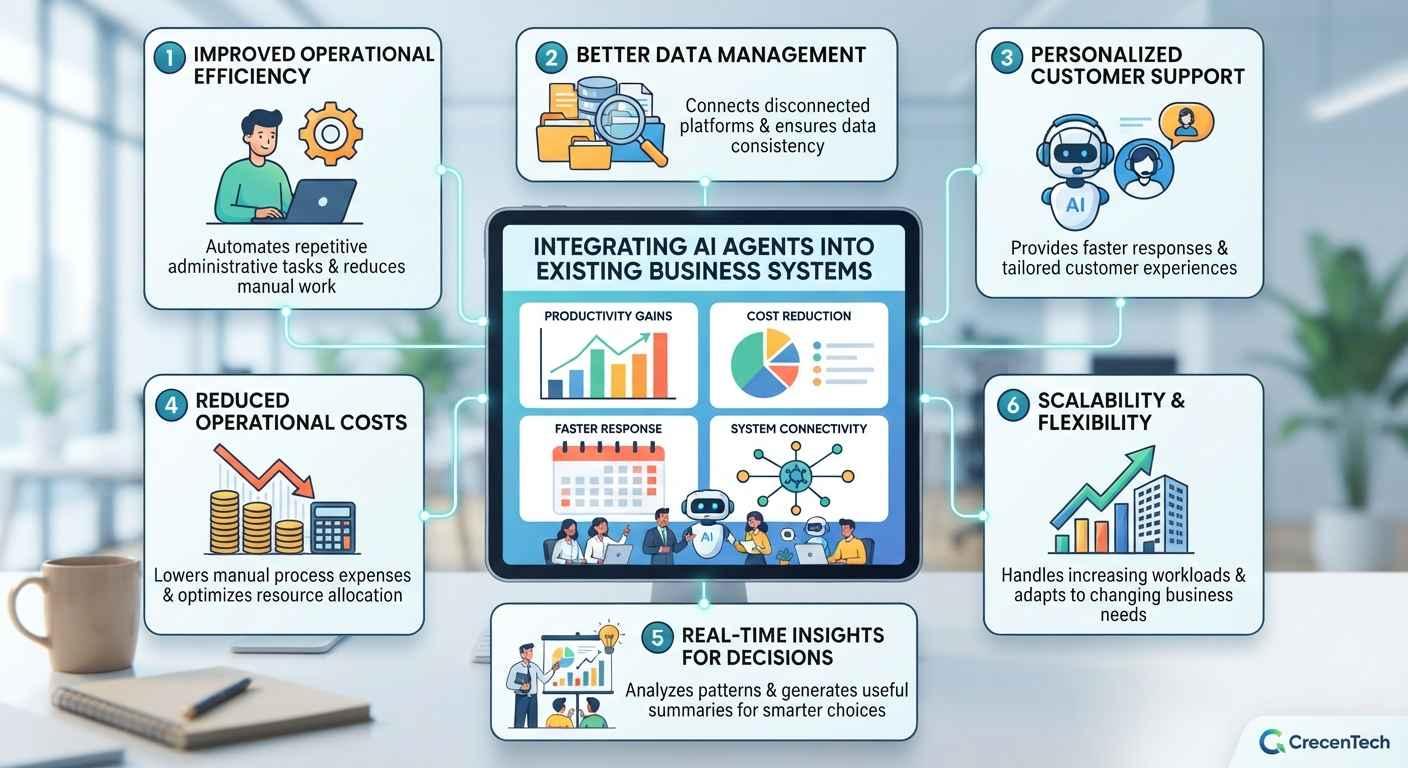
Businesses are constantly looking for ways to improve efficiency, reduce operational costs, and deliver better customer experiences. However, managing multiple software platforms, handling repetitive tasks, and keeping information organized can make daily operations challenging. Integrating intelligent automation into existing workflows offers a practical way to address these problems. With professional AI Agent Development Services, businesses can introduce intelligent systems that communicate with existing applications, analyze information, and complete tasks with minimal manual involvement.
Instead of replacing an entire technology infrastructure, companies can connect AI agents with the tools their employees already use. These integrations can support customer service, sales, marketing, finance, and internal operations. When implemented correctly, AI agents help organizations work more efficiently while allowing employees to focus on activities that require human judgment and creativity.
What Does Integrating AI Agents Into Existing Business Systems Mean?
AI agent integration involves connecting intelligent software agents with existing business applications, databases, and digital workflows. These agents can understand instructions, retrieve relevant information, make decisions within defined permissions, and perform specific actions.
For example, an AI agent connected to a company's customer relationship management system can review customer inquiries, retrieve account information, update records, and help sales representatives prepare follow up communications.
Unlike traditional automation, which generally follows predefined rules, AI agents can interpret different situations and adjust their actions according to available information. Deloitte explains how agentic automation can handle more complex workflows through contextual understanding, decision making, and human oversight.
This makes AI integration valuable for businesses that want to improve existing systems without completely changing their technology infrastructure.
6 Major Benefits of Integrating AI Agents Into Business Systems
1. Improved Operational Efficiency and Productivity
One of the biggest advantages of AI integration is the ability to reduce repetitive administrative work. Employees often spend considerable time entering information, responding to routine requests, organizing records, and transferring data between applications.
AI agents can automate many of these activities by interacting directly with existing software. For example, an agent connected to an inventory management platform can monitor stock levels, identify products that need replenishment, and notify the purchasing department.
This reduces unnecessary manual work and allows employees to spend more time on strategic responsibilities. Businesses can also process routine requests faster without continuously increasing their workforce.
2. Better Data Management Across Multiple Platforms
Many organizations use separate systems for customer management, accounting, marketing, inventory, and communication. When these platforms do not share information effectively, employees may struggle with duplicated records and outdated information.
Custom AI Agents for Business can connect different applications through APIs and other integration methods. They can retrieve relevant information, organize data, and transfer approved updates between connected systems.
For example, when a customer places an order, an integrated agent can retrieve the order details, check inventory availability, and provide relevant information to the customer support team.
Better information accessibility helps businesses reduce data inconsistencies and make more informed operational decisions.
3. Faster and More Personalized Customer Support
Customer expectations continue to increase, and businesses need to respond quickly across multiple communication channels. Traditional support teams may struggle to handle large volumes of repetitive questions while maintaining service quality.
An AI agent connected to a CRM platform or customer support system can access relevant customer information and provide personalized responses. It can answer common questions, check order statuses, guide customers through basic processes, and forward complicated requests to human representatives.
For example, an online retailer can use an AI agent to help customers track deliveries, understand return policies, and receive product recommendations.
This approach improves response times while allowing support employees to concentrate on sensitive or complicated customer issues.
4. Reduced Operational Costs Through Intelligent Automation
Manual processes require employee time, administrative resources, and ongoing supervision. As businesses grow, these expenses can increase significantly.
Integrating AI agents into existing workflows helps reduce the amount of repetitive work employees need to perform. For instance, an accounting department can use an AI agent to organize invoices, identify missing information, and prepare records for human review.
IBM research identifies improved decision making and cost reduction through automation among the reported benefits of agentic AI systems.
However, businesses should evaluate implementation, integration, maintenance, and monitoring expenses before expecting financial returns. The greatest value usually comes from automating high volume processes that consume significant employee time.
5. Smarter Business Decisions Through Real Time Insights
Making informed decisions requires accurate and accessible information. Unfortunately, managers often need to collect reports from several applications before understanding what is happening across their organization.
AI agents can retrieve information from connected business systems, analyze patterns, and generate useful summaries. Depending on their permissions, they can also identify unusual changes and notify relevant employees.
For example, a sales agent connected to CRM and analytics platforms can identify changes in customer activity, highlight potential opportunities, and help managers prioritize follow ups.
Enterprise AI Agent Development can support these capabilities by creating intelligent solutions that work across multiple departments while following organizational policies.
6. Greater Scalability and Business Flexibility
As companies expand, their operational requirements become more complicated. They may need to manage additional customers, employees, transactions, and communication channels.
AI agents can help businesses handle increasing workloads without requiring every process to be managed manually. Organizations can begin with one specific workflow and gradually introduce additional agents as their requirements evolve.
For example, a growing company might initially integrate an AI agent into customer support and later introduce separate agents for sales qualification, invoice processing, and internal IT assistance.
This gradual approach allows organizations to expand automation while maintaining control over their existing systems.
How Can Businesses Successfully Integrate AI Agents?
Successful integration requires more than selecting an AI tool. Businesses should first understand their existing workflows and identify areas where intelligent automation can provide measurable value.
Evaluate Existing Systems and Business Requirements
Start by reviewing the applications employees use daily. Identify repetitive tasks, disconnected platforms, information gaps, and processes that regularly create delays.
Choose a workflow where automation can deliver a clear improvement without introducing unnecessary complexity.
Prioritize Security and Data Protection
AI agents may access sensitive business information, so security must remain a priority. Companies should establish role based permissions, secure API connections, data access restrictions, and appropriate monitoring.
Human approval should also be required for sensitive actions such as financial transactions, account changes, and important customer decisions.
Start Small and Measure Performance
Rather than automating every department immediately, begin with a controlled implementation. Measure response times, processing accuracy, employee productivity, and operational costs before expanding the solution.
This makes it easier to identify technical problems and improve the integration before introducing additional agents.
Why Choose Professional AI Agent Development Services?
Building reliable AI integrations requires expertise in artificial intelligence, software development, API integration, workflow automation, and cybersecurity.
A professional development team can evaluate existing infrastructure, identify suitable use cases, and build solutions around specific business requirements. It can also help organizations select appropriate AI models, connect applications, establish permissions, and monitor performance.
CrecenTech provides technology solutions designed to help businesses improve their digital capabilities and streamline operations. Businesses exploring intelligent automation can visit CrecenTech to learn more about its technology services.
Working with experienced developers also helps organizations avoid unnecessary system changes and create integrations that can support future growth.
Conclusion
Integrating AI agents into existing business systems can help organizations improve productivity, simplify workflows, reduce repetitive tasks, and deliver better customer experiences. From connecting business applications to generating useful insights, intelligent agents offer practical opportunities to improve everyday operations without replacing an entire technology infrastructure.
However, successful implementation requires proper planning, secure integrations, and clearly defined business objectives. Investing in professional AI Agent Development Services allows companies to build intelligent solutions that align with their existing systems and long term goals. Businesses looking to take automation further can also explore ai automation agency services through CrecenTech to discover opportunities for smarter workflows and sustainable business growth.
Frequently Asked Questions
1. What are the benefits of integrating AI agents into existing business systems?
Integrating AI agents improves operational efficiency, automates repetitive tasks, connects business applications, enhances customer support, and provides useful insights for better decision making.
2. Can AI agents work with existing business software?
Yes. AI agents can connect with many existing applications through APIs, integration platforms, and other supported technologies. This allows businesses to introduce intelligent automation without replacing their entire software infrastructure.
3. How do AI agents improve business workflow automation?
AI agents can understand instructions, retrieve information, make decisions within defined permissions, and complete multiple connected tasks. This reduces manual involvement and helps businesses process routine workflows more efficiently.
4. Are custom AI agents suitable for small businesses?
Yes. Small businesses can use custom AI agents to manage customer inquiries, organize information, automate administrative tasks, and support sales activities. Solutions can be developed according to business size and operational requirements.
5. How does enterprise AI agent development support large organizations?
Enterprise AI agent development helps large organizations connect multiple applications, automate cross departmental workflows, manage information, and coordinate complex business processes while maintaining appropriate security and oversight.
6. Are AI agents secure when connected to business applications?
AI agents can be implemented securely through access controls, encryption, permission management, monitoring, and human approval processes. Security requirements should be considered during the development and integration stages.
7. How much does it cost to integrate AI agents into existing business systems?
The cost depends on system complexity, integration requirements, AI model selection, data infrastructure, and the number of workflows being automated. A professional assessment can help establish a realistic project budget.
8. How long does AI agent integration take?
Implementation time depends on the complexity of existing applications, data accessibility, customization requirements, and testing. A simple integration may take less time, while enterprise level solutions involving multiple systems require more planning and development.
Категории
Больше
Owners of aftermarket vehicles often seek clear guidance when replacing original rear lighting with modern units that improve visibility and style. Selecting suitable Led Custom Tail Lights involves confirming size, connector type, and mounting pattern so the new assemblies align with existing body openings and wiring harnesses. Carlamp-Factory works within the BaoZhiWei production system...

Why Natural and Architectural Stone Elevates Home Exteriors Upgrading your outdoor walkways, front steps, or backyard patio with quality stone immediately transforms the look and feel of a residential property. Unlike poured concrete slabs that can crack into jagged lines or asphalt driveways that soften in summer heat, interlocking stone pavers and natural flagstone flex slightly with seasonal...

Eastern Europe’s banking sector is undergoing a significant transformation as financial institutions modernize legacy infrastructure, expand digital services, and respond to evolving customer expectations. Core banking systems form the operational foundation of banks, supporting essential functions such as account management, transaction processing, deposits, lending, and customer...

Why Fine Textiles Need Specialized Care Area rugs bring warmth, color, and comfort to living spaces, yet they endure daily foot traffic, tracked-in winter salt, and airborne dust that slowly grind away delicate fibers. Unlike wall-to-wall synthetic flooring, hand-knotted wool, silk, and vintage textiles hold grit deep inside their foundation knots where standard household vacuums simply cannot...

The Aces combat the Mercury inside a few of their 4 conferences this year, which includes equally within August While Las Vegas was within the midst of compiling its 16-activity profitable streak toward conclusion the regular monthly period. It's tied with the minute-longest streak within league record with the 2014 Aces are manufacturing their fourth Finals visual appeal in just 6 a long time....